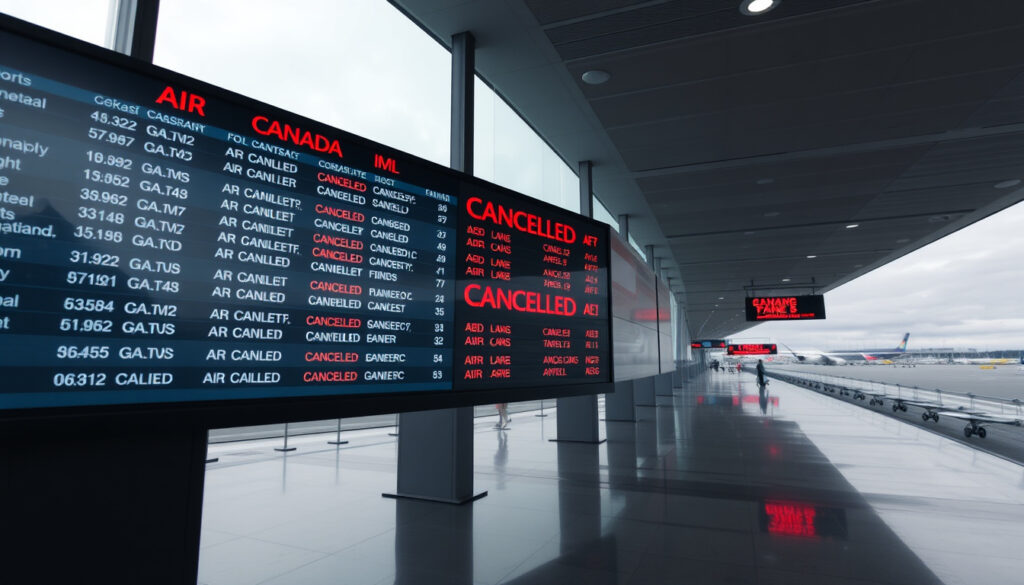
Air Canada Flights Cancelled Today – Check Status and Take Action
Air Canada operates hundreds of domestic and international flights daily across major Canadian hubs and beyond. When cancellations occur, the airline deploys several communication channels to keep passengers informed. However, determining current status requires accessing real-time data rather than relying on static schedules or third-party aggregators alone.
Are Air Canada Flights Cancelled Today?
Determining whether specific Air Canada flights are cancelled on any given day requires checking live flight tracking data. The airline operates three primary hub airports in Canada: Toronto Pearson International Airport, Vancouver International Airport, and Montréal-Pierre Elliott Trudeau International Airport. Disruptions at these major hubs can cascade into significant network-wide cancellations and delays.
According to available information, weather conditions and operational challenges remain the most common causes of same-day cancellations. Air Canada publishes a Daily Travel Outlook that forecasts potential disruptions by date, region, and city when weather or other circumstances may affect schedules. However, for confirmation of whether a specific flight is cancelled at this moment, real-time tracking resources provide the most accurate picture.
Passengers holding tickets on routes passing through major Canadian airports should monitor conditions closely. The most reliable verification method involves directly checking the flight number or route through Air Canada’s official flight status results page or the mobile application. FlightAware also maintains live fleet tracking data that shows cancellations as they are officially recorded.
Key insights from operational patterns include the following:
- Air Canada typically experiences the highest volume of cancellations during winter months due to snow and ice conditions affecting operations at major hubs.
- Mechanical issues on specific aircraft can lead to cascading delays and cancellations across connecting routes.
- Crew duty time limitations enforced under Canadian aviation regulations can force airlines to cancel flights when scheduling gaps occur.
- Air traffic control delays in congested airspace sometimes result in holding patterns that ultimately lead to cancelled departures.
- Passengers booked on affected flights receive priority consideration for rebooking on the next available service.
- The Air Canada mobile application provides push notifications for gate changes and cancellation updates.
- Third-party travel insurance and credit card protections may cover expenses incurred due to covered cancellations.
Key Facts and Verification Methods
| Fact | Details | Source |
|---|---|---|
| Primary verification method | Air Canada flight status results page or official mobile app | Air Canada |
| Live cancellation tracking | FlightAware maintains real-time lists of cancelled flights | FlightAware |
| Proactive notifications | Flight Notification Service alerts subscribers 24 hours, 4 hours, and periodically within 4 hours of departure | Air Canada |
| Canadian passenger protections | The Air Passenger Protection Regulations establish minimum compensation and rebooking rights | Canadian Transportation Agency |
| Key disruption periods | Winter months frequently bring weather-related cancellations at major Canadian hubs | Air Canada Daily Travel Outlook |
| Customer service line | Dedicated flight information line available for status inquiries | Air Canada |
Where Disruptions Occur Most Frequently
Canada’s three major international gateways serve as the nerve center of Air Canada’s operations. Toronto Pearson International Airport handles the lion’s share of domestic and transborder traffic, making it particularly vulnerable to cascading effects when weather or operational issues arise. The facility’s position as the country’s busiest airport means that disruptions here often ripple outward, affecting connecting flights across the network.
Vancouver International Airport and Montréal-Pierre Elliott Trudeau International Airport complete the triangle that forms the backbone of Air Canada’s hub-and-spoke model. Each airport presents its own seasonal challenges, with Vancouver grappling with Pacific storm systems and Montréal facing the brutal cold snaps that characterize Canadian winters. Understanding which Air Canada routes connect through these major hubs helps passengers anticipate where bottlenecks might form during periods of heightened disruption.
Understanding Why Cancellations Happen
The mechanics behind flight cancellations extend far beyond simple bad weather. While meteorological conditions account for a significant portion of disruptions, especially during Canada’s demanding winter season, they represent just one variable in a complex operational equation. Airlines must balance aircraft positioning, crew scheduling, maintenance timelines, and regulatory compliance against the demand for scheduled service.
Mechanical reliability presents another layer of complexity. When an aircraft requires unscheduled maintenance, the ripple effects can extend across multiple flights and routes. What begins as a single mechanical issue at one hub can cascade into a chain of cancellations and delays as replacement aircraft are repositioned throughout the network.
What Passengers Can Do
The first line of defense for any traveler is proactive monitoring. Rather than waiting for notification, passengers should check their flight status directly through official channels the moment they learn of potential disruptions in their travel area. This means visiting Air Canada’s flight status page and entering the specific flight number, or using the airline’s mobile application which delivers real-time updates directly to registered devices.
Rebooking options deserve immediate attention once a cancellation is confirmed. Air Canada’s tariff provisions entitle affected passengers to priority consideration for the next available flight on the same route. However, during widespread disruptions, available seats may be limited, making early action advantageous.
Passengers should also familiarize themselves with their rights under the Air Passenger Protection Regulations. These federal rules establish minimum standards for compensation and rebooking that apply regardless of the cause of cancellation, though the specific entitlements vary based on whether the disruption stems from factors within the airline’s control.
For the most accurate cancellation status, enter your flight number directly on the Air Canada flight status results page. This reflects official updates as they occur, providing confirmation before you head to the airport.
Staying Informed During Disruptions
Information flows differently during crisis periods. While the Daily Travel Outlook provides advance warning of potential disruptions, same-day cancellations require real-time data. FlightAware’s live tracking capabilities aggregate official airline data into easily digestible formats, showing exactly which flights have been cancelled versus those still scheduled to operate.
Airport-specific resources complement airline-provided information. Toronto Pearson, Vancouver International, and Montréal-Trudeau each maintain departure boards that update in near-real-time, offering a secondary verification method when airline systems are overloaded during major disruptions. These resources prove particularly valuable when monitoring flights operated by other carriers that connect with your Air Canada journey.
Final Recommendations
Navigating flight cancellations requires preparation and quick action. Bookmark the Air Canada flight status page before your trip, download the mobile application for push notifications, and keep your booking confirmation readily accessible. When disruptions occur, resist the temptation to simply wait for a call or email—proactive verification puts you in control of your rebooking options.
Remember that airline customer service representatives handle hundreds of affected passengers during major disruptions. Having your booking information, flight number, and preferred alternatives ready when you call shortens call times and improves your chances of securing the rebooking you need. Whether dealing with weather cancellations or operational disruptions, informed passengers fare better than those who wait passively for resolution.
Frequently Asked Questions
How can I check if my Air Canada flight is cancelled today?
The most reliable method is to visit Air Canada’s official flight status results page and enter your flight number. You can also check via the Air Canada mobile application or use FlightAware’s live tracking for real-time cancellation data.
What are the main airports affected when Air Canada cancels flights?
The three primary hub airports—Toronto Pearson International Airport (YYZ), Vancouver International Airport (YVR), and Montréal-Pierre Elliott Trudeau International Airport (YUL)—experience the most significant impact during disruptions. Weather or operational issues at these hubs often cascade into network-wide cancellations and delays.
What compensation am I entitled to if my Air Canada flight is cancelled?
Under the Air Passenger Protection Regulations, you may be entitled to rebooking on the next available flight and potentially compensation depending on the circumstances of the cancellation. Contact Air Canada directly to understand your specific entitlements.
When does Air Canada typically experience the most cancellations?
Winter months bring the highest volume of cancellations due to snow and ice conditions affecting operations at major Canadian hubs. The Air Canada Daily Travel Outlook forecasts potential disruptions by date and region when weather circumstances may affect schedules.
More related posts
 How to Reseed a Lawn – Step-by-Step Guide
 Best Rocoto Relleno Near Me – Local Options, Recipe and Guide
 Norway Milano Cortina 2026: Team, Schedule & Dominance
 Book Stores Near Me: Top Ireland & Dublin Shops Guide
 What Is Secondary School – Ages, Stages and UK vs US Guide
 Sidemen Charity Match 2025 – Results, Score and Recap
 Job Agency Near Me: Top Ireland Agencies
 Lunar New Year 2025: The Year of the Wood Snake Guide