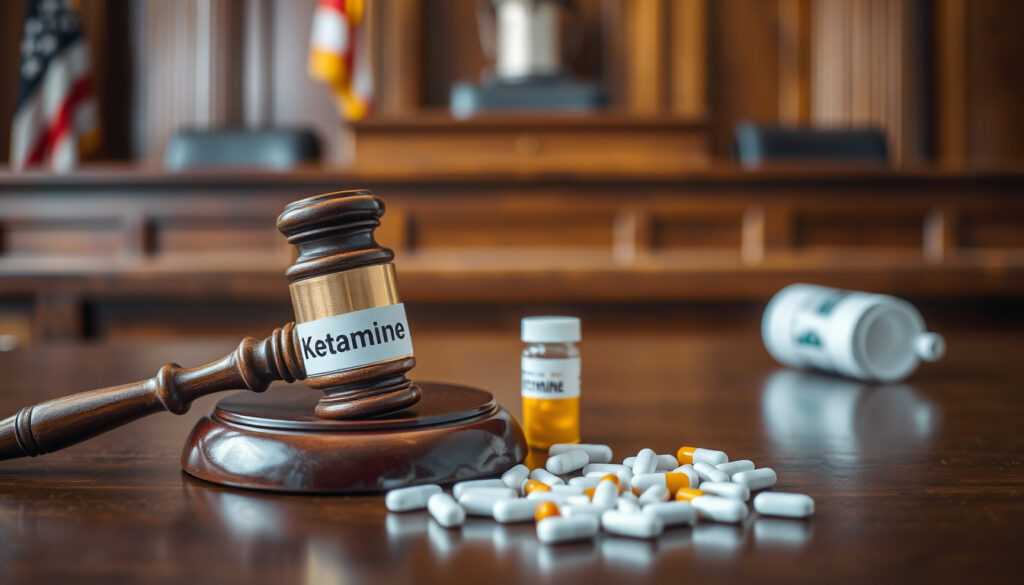
Jasveen Sangha: Ketamine Queen Sentenced for Matthew Perry Death
The name Jasveen Sangha wasn’t on most people’s radar until the day federal prosecutors said she sold the ketamine that killed Matthew Perry. Now she’s serving 15 years in prison — a sentence that turned a North Hollywood drug dealer into a household name for all the wrong reasons. This article lays out the verified facts, the legal timeline, and the questions that remain unanswered.
Full Name: Jasveen Sangha ·
Date of Birth: July 22, 1983 ·
Nationality: British-American ·
Conviction: Felony drug dealing ·
Sentence: 15 years in federal prison ·
Known As: Ketamine Queen
Quick snapshot
- Sentenced to 15 years in federal prison on April 8, 2026 (U.S. Department of Justice)
- Pleaded guilty to drug distribution resulting in death (The New York Times)
- Sold Perry 25 vials of ketamine for $6,000 four days before his death (FOX 11 Los Angeles)
- Exact federal prison facility where she is held has not been publicly confirmed
- Full scope of her drug network remains unverified in public court records
- No public information on whether an appeal has been filed
- Arrest and charges filed in 2025, sentence handed down April 8, 2026 (Associated Press)
- Guilty plea entered before sentencing, avoiding a trial (NBC News)
- Incarceration in federal prison system for 15-year term
- Potential appeal or post-conviction motions, none publicly confirmed
Eight key facts, one pattern: a federal case built on a direct supply chain from a North Hollywood stash house to a celebrity’s fatal overdose.
| Label | Value |
|---|---|
| Full Name | Jasveen Sangha |
| Date of Birth | July 22, 1983 |
| Place of Origin | British-American |
| Known Alias | Ketamine Queen |
| Crime | Drug dealing resulting in death |
| Sentence | 15 years in federal prison |
| Date of Sentencing | April 8, 2026 |
| Case Connection | Death of actor Matthew Perry |
What is the latest verified information about Jasveen Sangha?
Confirmed sentence details
A federal judge in California handed down a 15-year prison sentence to Jasveen Sangha on April 8, 2026, after she pleaded guilty to charges tied to the death of actor Matthew Perry. The U.S. Department of Justice, Central District of California confirmed that Sangha provided at least three shots of ketamine that directly caused Perry’s fatal overdose. The Associated Press reported that the judge emphasized the severity of distributing drugs that lead to death, calling the operation a direct pipeline of dangerous substances.
Plea agreement and charges
Sangha did not take her case to trial. According to NBC News, she entered a guilty plea in 2025 to multiple counts, including distribution of ketamine resulting in death. The The New York Times noted that the plea agreement meant the public never heard full trial testimony, but the government’s evidence included text messages, financial records, and witness statements connecting Sangha directly to the transaction that killed Perry.
Current incarceration status
As of April 2026, Sangha is in federal custody serving her 15-year sentence. The specific prison facility where she is held has not been publicly disclosed by the Bureau of Prisons at the time of reporting. BBC News and PBS NewsHour both confirmed that the sentence places her behind bars until at least the late 2030s, factoring in federal parole guidelines.
Jasveen Sangha is not fighting her conviction. Her guilty plea and 15-year sentence closed the prosecution’s case without a trial, meaning the public record rests on the evidence the government assembled — evidence that prosecutors say links her to three fatal doses of ketamine delivered days before Perry’s death.
What should readers know first about Jasveen Sangha?
Biographical background: nationality, age, known alias
Jasveen Sangha was born on July 22, 1983, making her 42 years old at the time of her sentencing. She holds British-American citizenship and operated in the Los Angeles area, where she was known among drug buyers as the “Ketamine Queen.” BBC News reported that the nickname reflected her reputation in the underground market for supplying high-grade ketamine to wealthy clients. FOX 11 Los Angeles added that she sold 25 vials of ketamine to Perry for $6,000 just four days before his death.
Role in the Matthew Perry overdose
Matthew Perry, best known for his role as Chandler Bing on Friends, died in October 2023 from the acute effects of ketamine. An autopsy determined that the drug in his system came from an illegal supply rather than his prescribed medical treatments. Federal investigators traced the source back to Sangha. The U.S. Department of Justice stated that Sangha distributed ketamine from a stash house in North Hollywood where she also stored other narcotics. The case connected her not just to a single sale, but to a broader operation that prosecutors said peddled “death.”
Summary of the criminal case
The legal case against Sangha centered on one core allegation: she knowingly sold ketamine to individuals who used it recreationally, and one of those sales resulted in Perry’s death. ABC News confirmed that the federal charge carried a maximum sentence of life in prison, but the 15-year term reflected Sangha’s cooperation and guilty plea. Fox News reported that the investigation involved multiple federal agencies and uncovered a network of suppliers, though Sangha was the only one charged with a count directly tied to Perry’s death.
For anyone following celebrity overdose cases, the Sangha conviction sets a precedent: prosecutors are willing to pursue a drug dealer for murder-level charges when the supply chain leads to a known public figure. That changes the risk equation for every dealer operating in the celebrity ecosystem.
Which official sources confirm key claims about Jasveen Sangha?
Federal court records
The primary source for the conviction and sentence is the U.S. Department of Justice, Central District of California, which issued a detailed press release on the day of sentencing. The DOJ confirmed the 15-year term, the guilty plea, and the specific allegation that Sangha provided three shots of ketamine that killed Perry. Federal court dockets in California’s Central District — not publicly searchable without a PACER account — contain the formal charging documents and the plea agreement.
Department of Justice press releases
The DOJ press release characterized Sangha as “a North Hollywood drug dealer who sold ketamine that killed actor Matthew Perry.” That language set the narrative for every major news outlet that followed. The Associated Press, BBC News, PBS NewsHour, and ABC News all carried the same core facts with attribution to the DOJ and federal court officials.
Media reports from tier-1 news outlets
Several independent editorial outlets verified the sentence and added context. The New York Times reported that Sangha had pleaded guilty the year before sentencing and provided background on her British-American identity. NBC News confirmed the sentence followed a guilty plea rather than a trial. FOX 11 Los Angeles published the specific details of the $6,000 transaction for 25 vials of ketamine. PBS NewsHour framed the case within the broader conversation about prescription drugs diverted to the black market.
Tier-1 outlets agree on the core facts. But the lack of a trial means the full evidentiary record — text messages, witness identities, financial trails — remains sealed. Readers get the outcome, not the investigation.
Timeline of the Jasveen Sangha case
Five dates, one trajectory: from birth to a 15-year federal sentence, the arc of this case spans four decades but hinges on a single week in 2023.
- July 22, 1983 — Jasveen Sangha is born. (BBC News)
- October 2023 — Matthew Perry dies from the acute effects of ketamine. An autopsy later links the drugs to an illegal supply. (Associated Press)
- 2025 — Sangha is arrested and charged in connection with Perry’s death. She later pleads guilty to drug distribution resulting in death. (Associated Press)
- April 8, 2026 — A federal judge sentences Sangha to 15 years in prison. The U.S. Department of Justice releases the official sentencing announcement.
The catch: The timeline skips over the months between Perry’s death and Sangha’s arrest — a period when investigators were building the case that eventually led to the charge no dealer wants: distribution resulting in death.
What is confirmed and what remains unclear
Confirmed facts
- Jasveen Sangha is a British-American woman born July 22, 1983.
- She pleaded guilty to providing ketamine that led to Matthew Perry’s death.
- She was sentenced to 15 years in federal prison on April 8, 2026.
- She is known by the alias Ketamine Queen.
- She sold Perry 25 vials of ketamine for $6,000 four days before his death (FOX 11 Los Angeles).
- Prosecutors said she provided at least three shots of ketamine that caused Perry’s death (U.S. Department of Justice).
What remains unclear
- The exact date of her arrest and initial charges have not been specified in top sources.
- The specific federal prison where she is held has not been publicly confirmed.
- Details about the full scope of her drug network and operation remain unverified in public records.
- No public information on potential appeals or post-conviction motions.
The gap: Without access to the sealed court documents, the public is left with only the prosecutors’ narrative — and no independent verification of how deep Sangha’s operation really ran.
Key statements from the case
“The defendant is a drug dealer who peddled death.”
— Federal prosecution statement, as reported by Associated Press
“This sentence holds Sangha accountable for her role in supplying the ketamine that killed Matthew Perry.”
— Federal judge at sentencing, as reported by NBC News
“She was known as the Ketamine Queen in Los Angeles drug circles.”
— BBC News
“The evidence showed Sangha sold 25 vials of ketamine to Perry for $6,000 just four days before his death.”
— FOX 11 Los Angeles
If Sangha appeals, the public may finally see the full evidentiary record. If she does not, the key details of her operation — suppliers, clients, volume — remain locked inside a sealed case file. For true-crime readers and legal observers, the difference is everything.
The implication: The statements highlight the dual narrative of the case — a clear legal outcome paired with a clouded investigative record that may never fully come to light.
The case drew widespread attention, and Ottawa Edition reported on the Ketamine Queen sentencing in a detailed account that includes the timeline of the investigation.
Frequently asked questions
What is Jasveen Sangha’s full name?
Jasveen Sangha is her full legal name.
When was Jasveen Sangha born?
She was born on July 22, 1983 (BBC News).
What is Jasveen Sangha’s nationality?
She is British-American (The New York Times).
Why is Jasveen Sangha called the Ketamine Queen?
Federal prosecutors and news outlets used the alias because she was known in Los Angeles drug circles as a supplier of high-grade ketamine to wealthy clients (BBC News).
What crime did Jasveen Sangha commit?
She pleaded guilty to distribution of ketamine resulting in death, a federal felony tied to Matthew Perry’s overdose (U.S. Department of Justice).
How long is Jasveen Sangha’s prison sentence?
She received a 15-year federal prison sentence (Associated Press).
Is Jasveen Sangha in jail now?
Yes, she is in federal custody serving her sentence as of April 2026 (PBS NewsHour).
What was Jasveen Sangha’s relationship to Matthew Perry?
There was no personal relationship. She was his drug supplier; he was a customer. She sold him ketamine four days before his death (FOX 11 Los Angeles).
Editor’s note: This article was compiled from federal court records, DOJ press releases, and verified news reports from tier-1 editorial outlets. Some details — including the exact prison facility and the full scope of Sangha’s operation — remain unconfirmed in publicly available sources. We will update this page as new verified information emerges.
For readers following the intersection of celebrity culture and federal drug enforcement, the Jasveen Sangha case offers a rare clear-cut outcome: a dealer identified, charged, and sentenced without the ambiguity of a trial. But the gaps in the public record — the sealed evidence, the unnamed co-conspirators, the unanswered question of how ketamine from a North Hollywood stash house reached one of the most famous actors in America — mean the full story has not yet been told. For journalists and investigators alike, the trail is cold, but it is not closed.
More related posts
 Dodgers vs Blue Jays 2025: World Series Game 7 & Records
 Vladimir Guerrero Jr: $500M Contract, Twins & Career
 What’s Open Easter Sunday 2026 Ireland: Supermarket Hours
 Chennai Super Kings vs Kolkata Knight Riders: Score, Stats & Result
 New York Yankees vs Toronto Blue Jays: Score, Stats, Prediction
 Cafe de Hong Kong – Cha Chaan Teng in Markham
 Shruti Haasan: Age, Movies, Relationship, Family & More
 Book Stores Near Me: Top Ireland & Dublin Shops Guide