Kilimanjaro Peak: Height, Difficulty, Cost, Safety (2025)
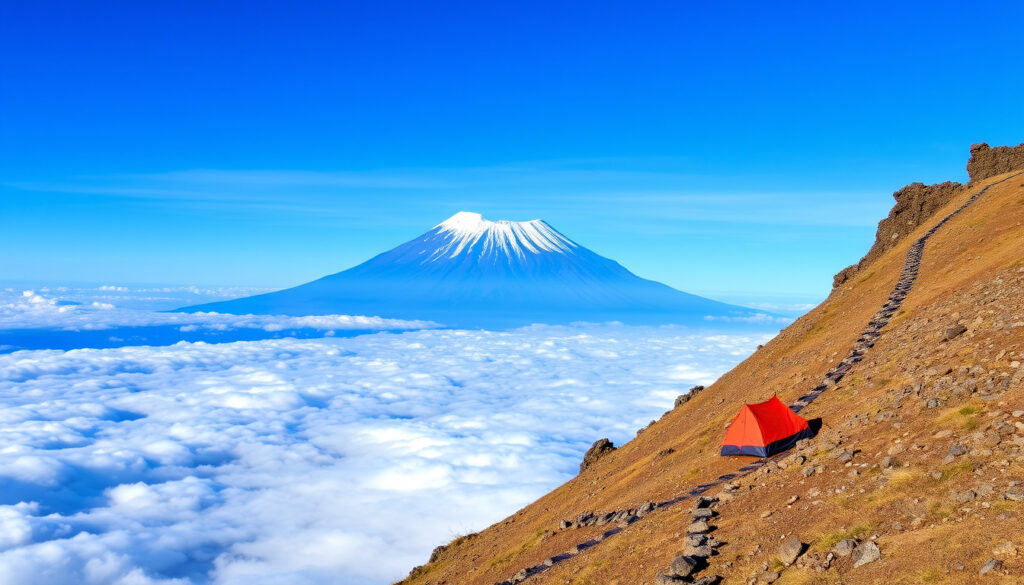
When most people first hear about climbing Kilimanjaro, they picture a grueling, technical expedition — but the reality is surprisingly different. The highest peak in Africa, Uhuru Peak at 5,895 m, is a trekking mountain that thousands of beginners tackle each year.
Elevation: 5,895 m (19,341 ft) · Location: Tanzania, East Africa · First Ascent: 1889 by Hans Meyer and Ludwig Purtscheller · Annual Climbers: ~35,000 · Summit Success Rate: ~65% (8-day routes)
Quick snapshot
- Height: 5,895 m (19,341 ft) – Wikipedia (free encyclopedia)
- Location: Kilimanjaro Region, Tanzania – Wikipedia (free encyclopedia)
- First ascent: 1889 by Hans Meyer and Ludwig Purtscheller – Wikipedia (free encyclopedia)
- Highest point: Uhuru Peak – Wikipedia (free encyclopedia)
- Exact annual death count varies by source; estimates range 10–15 – Mount Kilimanjaro Guide (climbing resource)
- Summit success rate depends on route and length; 65% is a common average – Climbing-Kilimanjaro.com (route specialist)
- Costs fluctuate based on operator, season, and group size – Tusker Trail (climbing operator)
- First confirmed ascent: 1889 – Wikipedia (free encyclopedia)
- Kilimanjaro National Park established: 1973 – KINAPA (park authority)
- Plan your climb: choose a route, budget $2,000–$6,000, and train 3–6 months in advance – Climbing-Kilimanjaro.com (cost guide)
- Best months: June–October and December–March – KINAPA (park authority)
Six key facts define the mountain before we dig into the details.
| Label | Value | |
|---|---|---|
| Elevation | 5,895 m (19,341 ft) | Wikipedia (free encyclopedia) |
| Prominence | 5,885 m (19,308 ft) | Wikipedia (free encyclopedia) |
| Location | Kilimanjaro Region, Tanzania | Wikipedia (free encyclopedia) |
| First Ascent | 1889 by Hans Meyer and Ludwig Purtscheller | Wikipedia (free encyclopedia) |
| Mountain Type | Stratovolcano (dormant) | Wikipedia (free encyclopedia) |
| Age | Approximately 2.5 million years | Wikipedia (free encyclopedia) |
What is the peak of Kilimanjaro called?
What is the height of Kilimanjaro?
- The highest point is Uhuru Peak at 5,895 m (19,341 ft) – Wikipedia (free encyclopedia)
- Kilimanjaro is a free-standing volcanic mountain – Wikipedia (free encyclopedia)
- It is located in Tanzania near the Kenyan border – Wikipedia (free encyclopedia)
What is Uhuru Peak?
Uhuru Peak, meaning “Freedom Peak” in Swahili, is the highest summit on the crater rim of Kibo, one of Kilimanjaro’s three volcanic cones. It was first reached in 1889 by German geographer Hans Meyer and Austrian mountaineer Ludwig Purtscheller, accompanied by local guide Yohani Kinyala Lauwo. The peak is the primary goal for all climbers.
The name matters: many climbers search for “Kilimanjaro peak” not knowing it’s called Uhuru Peak. Knowing this helps with route planning and permits.
The implication: referring to the summit by its proper name—Uhuru Peak—signals you’ve done your homework when booking with operators.
Can a beginner climb Kilimanjaro?
What is the success rate for first-time climbers?
- Beginners can climb with proper preparation and a good itinerary – Climbing-Kilimanjaro.com (route specialist)
- No technical climbing skills are required; it is a trek – Climbing-Kilimanjaro.com (route specialist)
- Success rate averages 65% on 8-day routes – Tusker Trail (climbing operator)
How difficult is the trek compared to other mountains?
K2 is higher (8,611 m) and far more technical, requiring advanced mountaineering skills. Everest (8,848 m) is harder due to extreme altitude, icefalls, and technical sections. Kilimanjaro’s difficulty lies in the altitude and the long hiking days, not in climbing techniques. Wikipedia (mountain encyclopedia) confirms that K2 is often called the “savage mountain” because of its steep, exposed terrain.
The 65% success rate means roughly one in three climbers does not reach the summit. The main reason is insufficient acclimatization, not lack of fitness.
What this means: choosing a route with more days on the mountain directly boosts your odds of summiting.
How many climbers died on Kilimanjaro?
What are the main causes of death?
- Annual death toll is estimated at 10–15 climbers – Mount Kilimanjaro Guide (climbing resource)
- Main causes: altitude sickness, falls, hypothermia, and pre-existing conditions – Altezza Travel (climbing operator)
- Overall fatality rate is very low (around 0.03% of climbers) – calculation based on 35,000 annual climbers
Is Kilimanjaro a dangerous mountain?
Compared to peaks like Denali or Annapurna, Kilimanjaro is statistically very safe. The mountain “forbidden to climb” refers to Mount Kailash in Tibet, which is sacred in several religions and closed to climbers. No mountain named Kilimanjaro is forbidden. The perception of danger is often inflated by news reports of isolated incidents.
Kilimanjaro’s low fatality rate (0.03%) coexists with a high rescue rate. The park rescue fee of $20 per trekker, reported by KINAPA (park authority), covers emergency evacuations that are fairly common for altitude sickness.
The pattern: low fatalities don’t mean zero risk—altitude sickness sends many trekkers back down.
Do I need oxygen to climb Kilimanjaro?
What altitude sickness prevention is needed?
- Supplemental oxygen is not required for Kilimanjaro – Climbing-Kilimanjaro.com (route specialist)
- Acclimatization days are crucial to prevent altitude sickness – KINAPA (park authority)
- Use of medication like Diamox is common but should be discussed with a doctor – Mount Kilimanjaro Guide (climbing resource)
What equipment is recommended?
Porters carry most gear; climbers should bring warm layers, a hydration system, and trekking poles. The most important piece of equipment is a good pair of boots. The mountain’s altitude (5,895 m) means the air pressure is about half that at sea level, but the body can adapt over 7–9 days. Tusker Trail (climbing operator) emphasizes that “pole pole” (slowly, slowly) is the golden rule.
The catch: even with gear, skipping acclimatization days is the fastest way to fail.
How much does it cost to climb Kilimanjaro?
What is included in the cost?
- Cost ranges from $2,000 to $6,000 per person – Climbing-Kilimanjaro.com (cost guide)
- Includes park fees, guide, porters, food, and accommodation – Tusker Trail (climbing operator)
- Cheaper operators may cut corners on safety and fair wages – Tusker Trail (climbing operator)
- Budget 5–10% extra for tips, gear rental, and personal expenses – Climbing-Kilimanjaro.com (cost guide)
How to choose a tour operator?
Look for operators with transparent pricing, fair porter policies, and a strong safety record. The Kilimanjaro Porters Assistance Project (KPAP) certifies operators who treat porters ethically. Avoid packages below $1,500 — they likely exclude necessary fees or pay porters poorly. KINAPA (park authority) notes that all climbers must go through a registered operator.
Five routes, one pattern: longer routes cost more but offer higher success rates due to better acclimatization.
| Route | Duration | Cost Range (per person) | Difficulty | Success Rate |
|---|---|---|---|---|
| Marangu | 6–8 days | $2,500–$3,000 | Moderate | ~50% |
| Machame | 7–9 days | $2,700–$3,500 | Moderate–Challenging | ~65% |
| Lemosho | 8–12 days | $3,000–$6,000 | Moderate | ~75% |
| Rongai | 7–9 days | $2,800–$3,500 | Moderate | ~60% |
| Northern Circuit | 9–10 days | $3,200–$4,000 | Moderate | ~80% |
The pattern is clear: spending more days on the mountain dramatically improves your odds.
Upsides
- No technical skills required – accessible to most fit beginners
- Stunning scenery from rainforest to arctic summit
- Relatively low cost compared to other 7,000 m peaks
- High success rate on longer itineraries
- Well-established guiding infrastructure
Downsides
- Altitude sickness is a real risk; can be severe
- Summit night is very cold and physically demanding
- Long flights and travel to Tanzania
- Cost can be unpredictable if you choose a cheap operator
- Environmental impact of thousands of climbers annually
The implication: the upsides outweigh the downsides for most, but only if you budget properly and respect the altitude.
How to prepare for a Kilimanjaro climb
- Step 1: Choose your route. Longer routes like Lemosho (8+ days) offer better acclimatization and higher success rates. Climbing-Kilimanjaro.com (route specialist) recommends Lemosho and Machame as the best choices.
- Step 2: Train physically. Focus on cardiovascular endurance, leg strength, and hiking with a loaded backpack. Aim for 3–6 months of regular training – Tusker Trail (climbing operator) suggests long hikes on weekends.
- Step 3: Pack smart. Essential gear: warm layers, waterproof jacket, trekking poles, hydration bladder, headlamp, sleeping bag rated to -10°C. Mount Kilimanjaro Guide (climbing resource) has a full packing list.
- Step 4: Acclimatize. Choose an itinerary with at least one acclimatization day. “Pole pole” is the mantra – KINAPA (park authority) emphasizes a slow ascent.
- Step 5: Hire a reputable operator. Use KPAP-certified operators. Budget $2,000–$6,000. Avoid anything under $1,500 – Tusker Trail (climbing operator) warns that it’s impossible to climb for less than $1,200 due to unavoidable park fees.
The single biggest mistake beginners make is choosing a short, cheap route. The data shows that 8-day routes have a 65% success rate compared to 50% for 6-day routes. An extra two days on the mountain is the best investment you can make.
Clarity: confirmed facts vs. common myths
Confirmed facts
- Uhuru Peak is 5,895 m (19,341 ft) – Wikipedia (free encyclopedia)
- Kilimanjaro is a dormant stratovolcano – Wikipedia (free encyclopedia)
- First ascent was in 1889 – Wikipedia (free encyclopedia)
- Annual fatality rate is ~0.03% – based on 10–15 deaths per 35,000 climbers
Common myths (unclear or false)
- “You need oxygen to climb Kilimanjaro” – false; supplemental oxygen is not required
- “Kilimanjaro is forbidden to climb” – false; that refers to Mount Kailash
- “The mountain is evil or dangerous” – false; low fatality rate
- “K2 is harder than Kilimanjaro” – true, but K2 is also higher and more technical
The catch: even experienced hikers fall for the oxygen myth, which causes them to skip acclimatization planning.
What experts say
It is the highest mountain in Africa and the highest free-standing mountain above sea level in the world.
— Wikipedia (free encyclopedia)
It is not possible to climb Kilimanjaro for less than $1,200 because of unavoidable park costs.
— Tusker Trail (climbing operator)
The park fees are typically about $900 to $1,200 per trek, operator-inclusive.
— KINAPA (park authority)
For the aspiring climber, the choice is clear: invest in a longer route with a reputable operator, or risk a failed summit attempt and a wasted trip. The data shows that 8-day routes have a significantly higher success rate, and the extra cost is justified by the increased chance of standing on Uhuru Peak. For the budget-conscious traveler, the implication is simple: save up for the Lemosho or Northern Circuit, or consider a shorter trip to Machame with a proven operator.
Related reading: Mount Kilimanjaro: Beginner Safety & Difficulty Guide · Mount Kilimanjaro: Beginner Safety & Difficulty Guide
kilimanjaroparktanzania.com, muchbetteradventures.com, altezzatravel.com, teamkilimanjaro.com, followalice.com, iantaylortrekking.com, iantaylortrekking.com
Frequently asked questions
What is the best time to climb Kilimanjaro?
The best months are June–October (dry season) and December–March (warmer, but with occasional rain). The wettest months (April–May, November) are not recommended.
How long does it take to climb Kilimanjaro?
Most routes take 6–9 days. The most common durations are 7 days (Machame) and 8 days (Lemosho). Longer routes have higher success rates.
What is the success rate for climbing Kilimanjaro?
Average success rate is about 65% on 8-day routes. Shorter routes (6 days) have lower rates (~50%). Longer routes (9+ days) can exceed 80%.
Is Kilimanjaro a volcano?
Yes, it is a dormant stratovolcano composed of three cones: Kibo, Mawenzi, and Shira. Kibo is the highest and the only one with a summit crater.
Can I climb Kilimanjaro alone?
No, independent climbing is not allowed. All climbers must be accompanied by a registered guide and porters as per Tanzania National Parks regulations.
What gear do I need for Kilimanjaro?
Essential gear includes: warm layers, waterproof jacket, trekking poles, hydration system, headlamp, sleeping bag (-10°C), and a good pair of boots. Porters carry most gear.
Do I need travel insurance for Kilimanjaro?
Yes, comprehensive travel insurance that covers altitude sickness (up to 5,900 m) and emergency evacuation is strongly recommended. Many operators require it.
Related reading
More related posts
 Why Are Flags at Half Mast Today? Ireland, UK, US Updates
 53 USD to CAD – Convert 53 US Dollars to Canadian Dollars
 Quinta Brunson: Biography, Age, Husband, Net Worth, and More
 Tony Soprano: Character, Death & James Gandolfini Facts
 Jack Ma: What Happened, KFC Rejection, Disappearance & Return
 Lance Stroll: F1 Win, Billionaire Dad & Nepo Baby Debate
 Doug Gilmour: Career, Net Worth, Family & Where He Lives
 Amelia Earhart: Disappearance, Last Words, and Theories Explained